Dunedin (727) 734-7611
Largo (727) 587-6667
St. Petersburg (727) 520-1818
1075 Main St. Dunedin, FL 34698
515 Missouri Avenue North Largo, FL 33770
3737 16th Street North St. Petersburg, FL 33704
Pinched nerves happen when bones, tendons, muscles, or inflammation exert excessive pressure on a nerve. If you have a compressed or pinched nerve, your body will likely send warning signals – which often include discomfort, pain, and other symptoms. It is essential not to ignore the warning signs your body is sending.
Fortunately, chiropractic care offers a variety of noninvasive and beneficial techniques that can effectively relieve the pain and symptoms resulting from a pinched nerve.
Nerves, which extend from your brain & and your spinal cord, have an important function - sending messages (actually electrochemical signals) at incredible speeds (often exceeding 100 miles per hour) to various parts of your body.
The term "pinched nerve" describes a type of damage/injury to a nerve or set of nerves. A pinched nerve may happen in various body parts, including the spine, neck, arms, legs, wrists, hands, and feet. The specific causes of nerve compression will vary and depend on the exact location of your compressed or pinched nerve.
There are various reasons why you may develop a pinched nerve. Nerves are most vulnerable in those parts of the body where they must traverse narrow spaces without much soft tissue to offer protection.
Nerve compression is most likely to happen when a nerve becomes compressed between various body structures (i.e., ligaments, tendons, bones, discs, etc.) or other factors. These include –
The potential damage from a pinched nerve varies from minor to severe, and the resulting symptoms may be temporary or develop into chronic, long-lasting problems. So, the earlier the diagnosis, the earlier your treatment for the pinched nerve can begin, and the quicker you will start to feel relief.
Symptoms from a pinched nerve may result from changes to your spinal discs or vertebrae and manifest in a number of ways - from pain, weakness, and tingling to numbness in a related area. Other symptoms might include -
Chiropractors are professionally trained to apply various therapeutic interventions to identify and address a pinched nerve's symptoms/underlying causes. Chiropractors can relieve pain using-
Also known as spinal manipulations, this relieves pressure on the nerve by restoring proper alignment, reducing pain, and increasing mobility.
These therapies, which often include massage and other techniques, help relax tightened muscles and reduce inflammation in the afflicted area. Releasing muscle tension is an effective way to reduce pressure.
Chiropractors can help educate patients on how proper posture and the addition of ergonomic features/furniture can help alleviate nerve compression and pain. Therapeutic exercises that help to improve posture will offer pain relief and help reduce the risk of future nerve compression.
In addition, to help keep you moving pain-free, chiropractors may offer lifestyle adjustments that will help better manage your condition and its symptoms. Lifestyle changes may include exercising, stretching, and relaxation techniques that help relieve stress and muscle tension, which can often contribute to your pinched nerve.
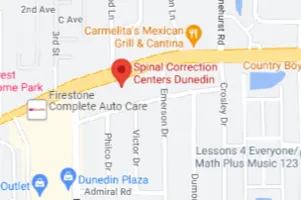 Dunedin
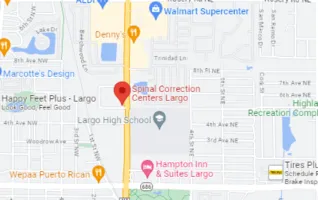 Largo
Largo515 Missouri Avenue North,
Largo, FL 33770
727-587-6667
Monday, Wednesday
8:00 AM -11:00 AM, 3:00 PM - 6:00PM
Friday
8:00 AM -11:00 AM
St. Petersburg3737 16th Street North,
St. Petersburg, FL 33704
727-520-1818
Monday, Wednesday, Thursday
8:00 AM - 12:00 PM, 2:00 PM - 6:00 PM
Tuesday
3:00 PM - 6:00 PM
Friday
8:00 AM - 11:00 AM
